We’re Raising Kids in a World We Didn’t Grow Up In
A father’s reflection on children, screens and paying attention in a digital world that keeps changing around us.
 Illustrative image
There was a time when screen time was a fairly simple discussion.
You wanted to play on the computer or spend another hour on the PlayStation. Your parents looked outside, noticed the sun was shining and told you to go out and play.
End of discussion.
I remember those days pretty well.
Now I'm a father myself, and I've discovered that deciding what your child watches is a little more complicated than deciding whether it's too nice outside for video games.
My daughter is growing up in a world where entertainment is available whenever she wants it. There are cartoons, movies, games and endless videos about practically anything she finds interesting.
And, of course, she has her own opinions about what she wants to watch.
Quite strong opinions, actually.
I sometimes find myself thinking about how different her childhood is from mine. And how we're supposed to figure all of this out as parents when the technology keeps changing around us.
Of course she likes the videos I'd rather she didn't watch
One thing I've noticed with my daughter is that she really enjoys short videos.
Especially when they're full of familiar characters, recognizable situations and things she already likes.
And I get it. They're colorful, entertaining and often incredibly fast-paced.
Unfortunately, those are also the videos I sometimes wish she'd spend a little less time watching.
It's a funny situation to be in.
You might prefer to put on a nice, relaxing animated movie, while your child would much rather watch another short video with a dozen things happening in thirty seconds.
And she has a point, at least from her perspective. She knows what she enjoys.
But she's also still a child.
I don't expect her to understand why certain platforms are designed the way they are, or why an endless stream of recommendations might be something worth taking a break from.
To be fair, plenty of adults struggle with that too.
I certainly know what it's like to open Instagram for five minutes and discover that considerably more time has passed.
So when I see how easily my daughter gets drawn into short videos, I recognize something familiar.
The difference is that I'm the adult in the room now.
Which is still a slightly strange realization.
Sometimes an iPad is just an iPad
There's a certain amount of pressure surrounding screen time and parenting.
You hear about limiting screens, encouraging outdoor play and making sure children don't spend too much time watching videos.
And I understand where those concerns come from.
But there's also everyday family life.
Sometimes you're cooking. Sometimes you're tired. Sometimes everyone needs a quiet moment.
And sometimes your child simply wants to relax and watch something.
I don't think we need to turn every one of those moments into a discussion about whether we're doing parenting correctly.
I've seen my daughter genuinely enjoy sitting down with something she likes.
I've also seen how easily she can become interested in something completely different.
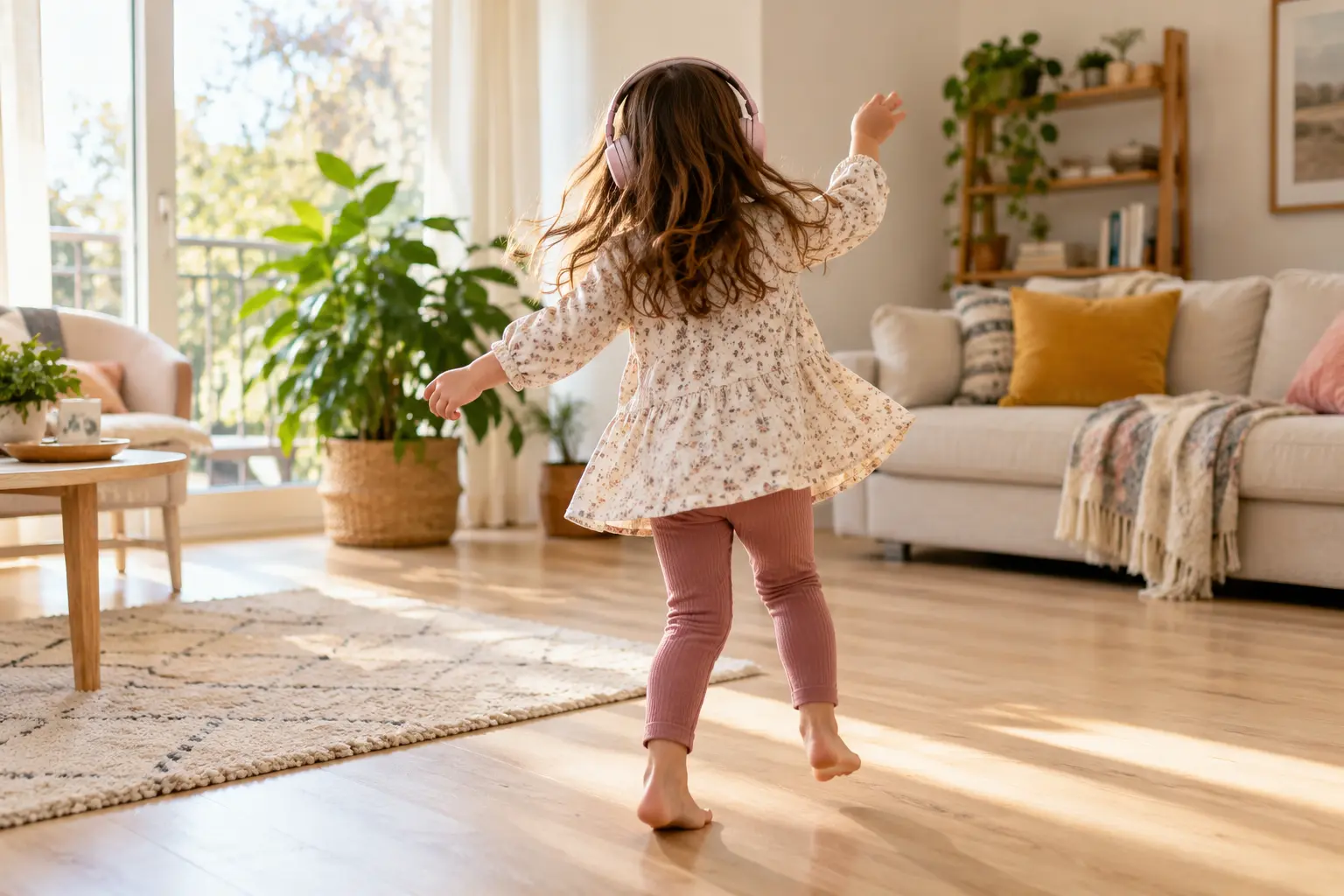
Put on some music, give her a pair of children's headphones, and suddenly she's dancing around the room.
Other times she's happy crafting, playing or coming up with an idea of her own.
And sometimes she'd rather go to the playground.
Children have a whole world of interests beyond whatever happens to be on a screen.
I think it's easy to forget that when the conversation becomes entirely about how many minutes they've spent watching something.
I pay attention to what she's watching
I find myself thinking less about the screen itself and more about what's actually happening on it.
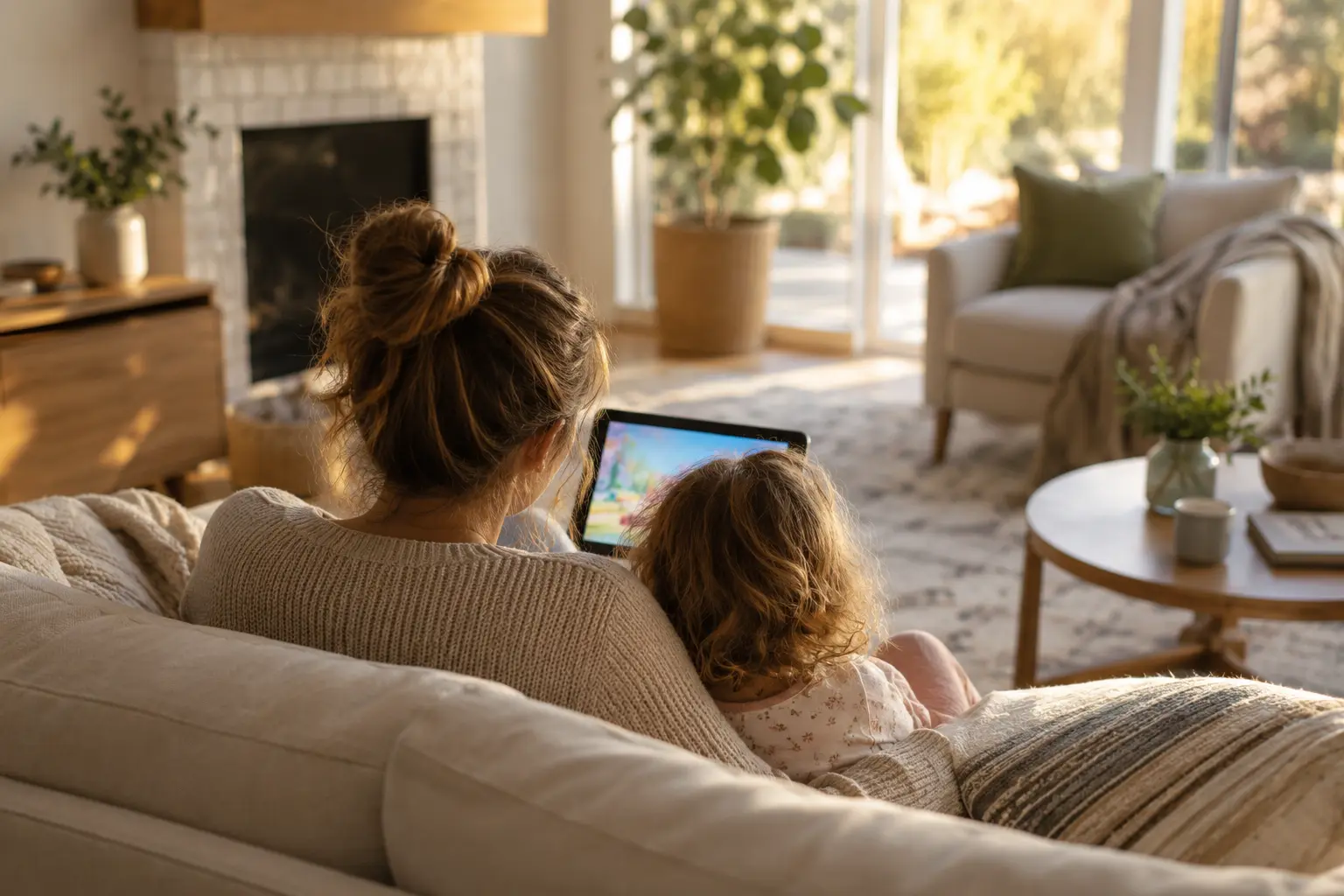
For example, I sometimes watch along when my daughter is using YouTube Kids.
Not because I want to supervise every second of her entertainment, but because I'm curious about what she's seeing.
What does she enjoy? What makes her laugh? What kind of videos keep appearing?
And occasionally, what makes her uncomfortable?
There have been moments when she's told me something on the screen was scary.
When that happens, I turn it off.
I don't feel the need to convince her that it's only a cartoon, that it isn't real or that she should keep watching until she gets used to it.
If she doesn't feel comfortable watching something, that's enough for me.
She's still discovering the world, and I like the idea that she can tell me when something doesn't feel right.
Maybe that's one of the more useful things we can teach our children about technology.
They can have preferences. They can change their minds. They can decide that something isn't for them.
Of course, I'm still the parent, and that means making decisions she might not always agree with.
But I also want her to feel that her opinion matters.
Even when we're talking about something as ordinary as a cartoon.
The algorithm doesn't know your child like you do
Something I find interesting about children's entertainment today is how much of it is shaped by recommendations.
You start with one video, and the platform has another one waiting.
Then another.
And another.
The system learns what holds someone's attention, just as it does with adult content.
I work in online marketing, so I know how good algorithms can get at understanding people's interests. I'm basically the César Millan of algorithms at work, training them to reach the right audience. And then I come home to find myself on the other side, watching YouTube Kids with my daughter. Funny how that works.
I don't expect an algorithm to understand whether my daughter has had enough excitement for one afternoon, whether something might frighten her or whether she'd actually have more fun doing something else.
Those are things I can notice by spending time with her.
Sometimes she's perfectly happy after watching something.
Other times, it might be a good moment to turn the screen off and find another activity.
I don't have a scientific formula for making those decisions.
I just try to pay attention.
And honestly, I think that's already a pretty meaningful part of parenting in a digital world.
Some of the best entertainment is older than she is
One thing I appreciate about raising a child in the Netherlands is that there's plenty of Dutch-language children's entertainment to choose from.
There are familiar programs, cartoons and movies that give us options beyond whatever happens to appear next in a recommendation feed.
And sometimes, I get to revisit something I loved myself.
Which is a surprisingly nice part of becoming a parent.
I've discovered that some of the things I enjoyed as a child still work perfectly well today.
My daughter, for example, has an old Pikachu plush toy that used to be mine.
To her, it's basically a wonderful new discovery.
To me, it's a little piece of my childhood sitting there with her.
Apparently, Pikachu has a longer career than most of us.
It's funny how that works.
We spend so much time thinking about all the new technology our children are growing up with, while some of the things they love are the same things we loved years ago.
And I like those moments.
They remind me that childhood isn't entirely different now.
Children still want to laugh, play, discover things and become completely obsessed with a favorite character.
The world around those experiences has changed enormously.
But the experiences themselves can still feel wonderfully familiar.
Different times, different challenges
Our parents had their own challenges raising us, and there's plenty we can learn from their experience. But technology played a different role in our childhood.
Back then, screen time was often about how long you could play on the computer or PlayStation. Today, children can explore an entire online world, interact with other people and come across content we might never have expected them to see.
And that brings a whole new set of questions. Who are they interacting with? What are they watching? And how do we help them recognize when something or someone online doesn't feel right?
I think it's worth remembering that when different generations talk about parenting. Times have changed, and we're all learning to navigate them.
I don't think there's a perfect screen time routine
I know there are recommendations about children's screen use, and I think it's sensible to take them seriously.
But I also think every family has its own rhythm.
Every child is different.
Some children get excited by things that others find overwhelming. Some love sitting down for a movie. Others would rather spend their time doing something more active.
And those preferences can change as they grow.
With my daughter, I try to stay curious about what she enjoys and how she responds.
Sometimes that means watching something together.
Sometimes it means switching something off.
And sometimes it means putting on music and letting her dance.
I'm sure there will be plenty of new questions as she gets older.
Different apps, different interests, different conversations.
I don't expect to have all the answers by then either.
But I hope she'll feel comfortable talking to me about what she sees online, just as she can tell me now when something frightens her.
That feels like a good place to start.
Give yourself a little credit
There's something I want to say to other parents reading this.
I know how easy it is to feel that you should be doing more.
More outdoor activities. More creative play. Less television. Less time on the iPad.
There's always another opinion about how children should be raised.
And when technology enters the conversation, those opinions can become particularly strong.
I'm still figuring things out myself.
I enjoy technology. I see the incredible things it makes possible. And I also recognize that some parts of it deserve a little extra attention when children are involved.
I don't always know what the ideal balance looks like.
Maybe you don't either.
But if you've read this far, there's a good chance you're thinking about these things because you care deeply about your child.
You want them to have fun. You want them to feel safe. You want them to discover the world and grow into someone who can make their own choices.
That matters.
Caring doesn't mean every decision will be perfect. It doesn't mean there won't be difficult afternoons, disagreements or moments when the iPad feels like the easiest option.
It means you're paying attention, asking questions and trying to understand the world your child is growing up in.
And in a world where attention is constantly being pulled in a hundred different directions, giving your child yours is something worth feeling good about.
So maybe give yourself a little credit.
We're raising children in a world we didn't grow up in.
And we're learning as we go.
At Auroriva, we explore what it means to live with technology, including the ways it shapes our homes, habits and families. Join our newsletter or follow Auroriva on YouTube for more personal stories and perspectives.

Founder & editor of Auroriva.
More about the editor