Finding Your Own Way With AI
A practical case for choosing the level of AI, structure and autonomy that genuinely fits the way you work.
 Illustrative image
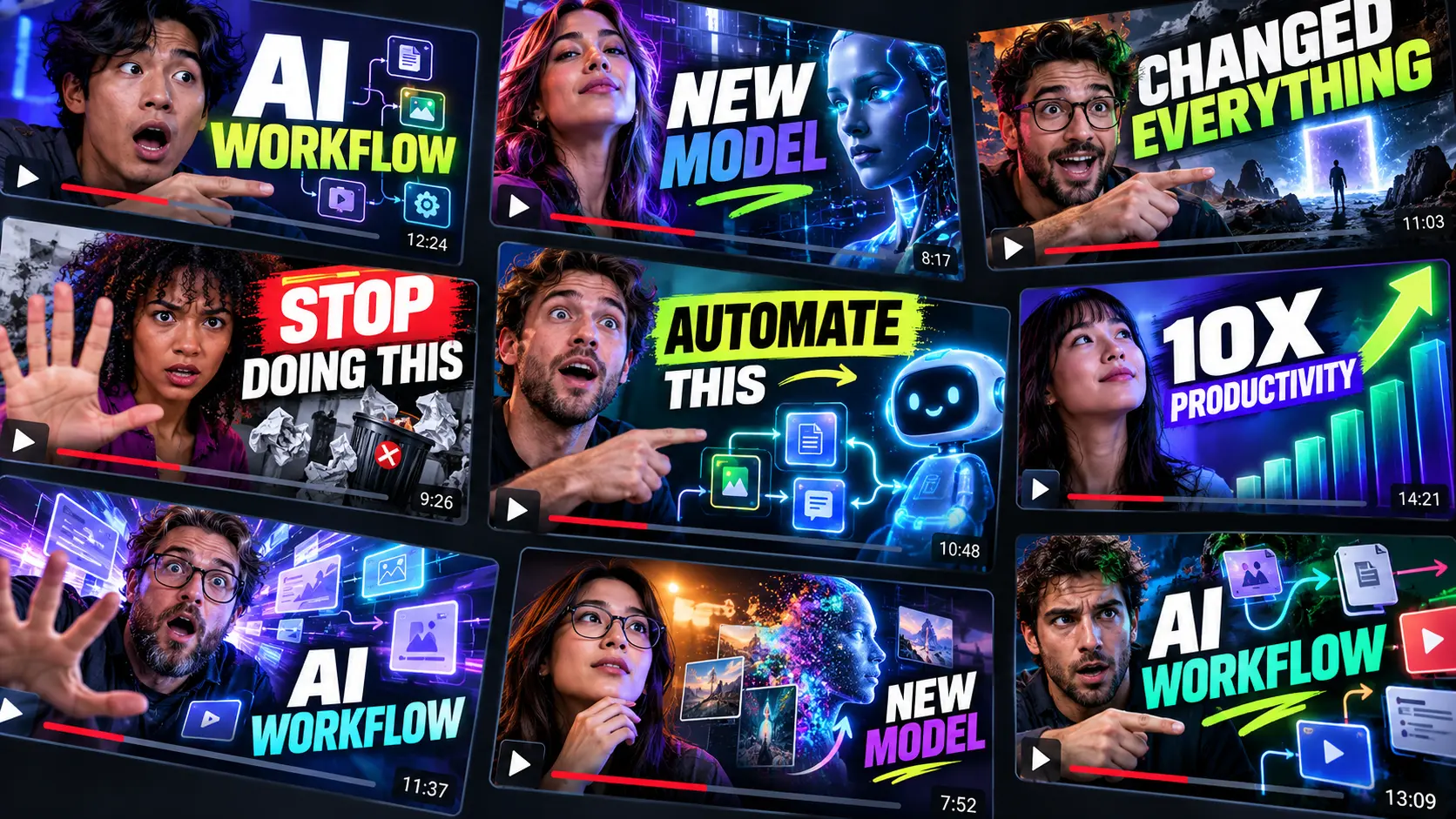
You can spend an entire evening watching people explain how they use AI. One person has a carefully designed prompt library. Another has agents running in the background. Someone else has built a dashboard to manage the dashboards.
It all looks impressive. Then you open your own AI chat and wonder what, exactly, you're supposed to do with any of it.
I've spent a lot of time trying different things with AI, simply because there are so many ways to use it. Every new possibility I came across made me want to try something else.
The more I discovered, the more excited I became to see what else I could do with it.
The workflow you saw on YouTube belongs to someone else
It's easy to confuse an interesting demonstration with something you actually need. A creator shows how to automate a process, and suddenly you're imagining how that process might fit into your day. Sometimes it does. Sometimes you've just given yourself another project to build and maintain.
The question I keep coming back to is what output I actually need.
If I want to understand a topic, a conversation and some research might be enough. If I need a finished document, I can give AI the context and ask it to work toward that result. If I want to stay informed about a subject every Monday, a scheduled chat may do the job without a complicated chain of agents.
That last option sounds less exciting than an 'agentic workflow'. It's also wonderfully concrete.

More AI isn't necessarily better AI
There's a temptation to use the most capable model for everything. But not every request needs the same amount of reasoning.
Think about the decisions you make yourself. You don't sit down for a deep analysis every time you need to put a familiar appointment in your calendar. Comparing two complicated options, on the other hand, deserves more attention.
AI models can be approached in a similar way. A lightweight model may be enough for straightforward classification, formatting or routine text tasks. More capable reasoning models become useful when the problem is genuinely difficult, ambiguous or requires careful comparison. The exact trade-off depends on the model, task and provider, so it's worth testing the result rather than assuming that smaller always means good enough.
There's a practical side to this too. Different models can have very different usage costs and computing requirements. Choosing the right tool for the job is often more useful than automatically reaching for the biggest one.
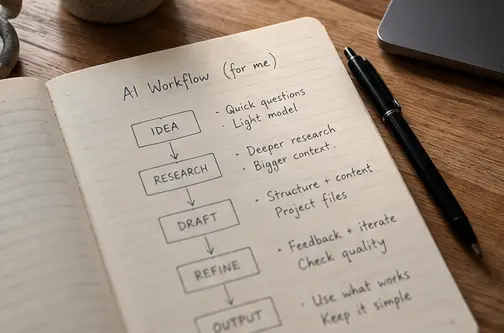
A little structure goes a long way
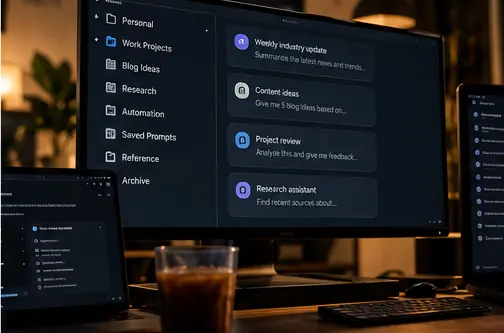
One of the more useful shifts is giving AI a place to work from. A project environment can hold background information, writing preferences, recurring instructions and examples of what a good result looks like.
Instead of explaining the same context every time, you can build on what is already there. Different projects can have different rules. A writing project might need editorial context; an administrative workflow might need a checklist and a clear approval point.
That doesn't mean everyone needs a sophisticated AI operating system. A well-organized folder and a few reliable instructions can already make a difference.
From cruise control to autopilot
Agentic AI opens up a whole range of ways to work. At one end, AI is a bit like cruise control. You're still driving, deciding where to go and keeping an eye on the road, while it takes some repetitive work off your hands.
Further along, you might give an agent a goal and let it carry out several steps on its own. That feels closer to autopilot. It can gather information, organize files or prepare something for you to review. For a familiar, low-risk task, you might even let it finish the job without checking every step.
I like thinking about these as options rather than levels everyone needs to reach. Sometimes I want to work alongside AI and make each decision myself. Other times, I know exactly what needs doing and would rather let a reliable workflow handle it. The important thing is knowing what the system is doing and when I want to step in.
And sometimes a simple question in a chat is still the easiest way to get something done.
Eventually, it starts to feel like your own setup
I don't think the goal is to copy the most elaborate workflow you can find. It's to notice which tasks keep coming back, what you want the outcome to look like and how much involvement you actually enjoy.
You might end up with a few saved prompts. You might build dedicated project environments. You might use agents for repetitive work and keep the more personal decisions to yourself.
The interesting part is that the tools can be similar while the ways people use them are completely different.
If you've been experimenting and none of the impressive workflows quite fit, maybe you haven't missed a secret technique. Maybe you're still finding your own.
For more everyday experiments with technology, join the Auroriva newsletter or follow our YouTube channel.

Founder & editor of Auroriva.
More about the editor