I Bought My iPhone to Create. So Why Was I Always Scrolling?
A personal experiment in making an iPhone feel like a creative tool again, rather than a place to lose an evening.
 Illustrative image
I remember being genuinely excited about the camera on my iPhone Pro.
I had all these ideas. I wanted to film more, create content, experiment with photography and finally start making some of the things I'd been thinking about for years.
And now I had this incredible little computer in my pocket. A camera, editing studio, notebook and creative workspace, all in one device.
There was just one problem.
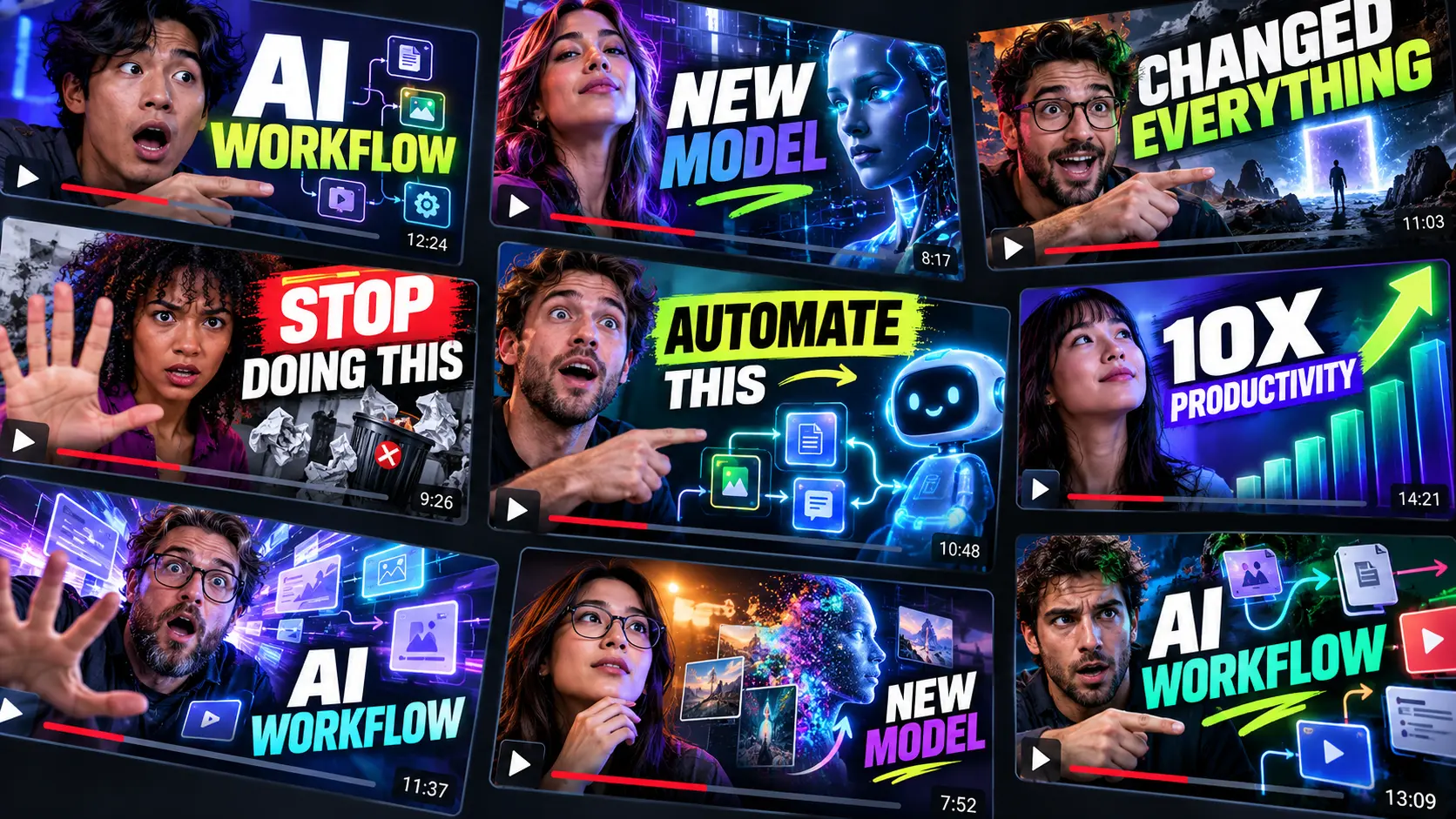
I spent an awful lot of time watching videos about what my iPhone could do.
Camera comparisons. Filmmaking tips. New apps. Creative workflows. People showing off everything you could achieve with the latest technology.
Meanwhile, the videos I wanted to make myself were still mostly ideas in my head.
I suspect I'm not the only person who's experienced this.
We get excited about the possibilities of technology. We research what to buy, learn about its features and watch other people do amazing things with it. Sometimes, researching what we could create becomes an activity of its own.
And before you know it, you've spent another evening watching someone else create.
When entertainment becomes a habit
I genuinely enjoy Instagram.
My algorithm knows my sense of humor, my interests and the kind of videos that will make me laugh. Some of the things it recommends are ridiculously entertaining.
Which, of course, is exactly why it's so easy to keep watching.
We all know that social media platforms are designed to keep us engaged. Their recommendation systems learn from what we watch, like and interact with, then serve up more of it.
Yet it's surprisingly easy to believe we'll somehow outsmart the whole thing.
I'll just watch a couple of videos.
I'll check what my friends are doing.
Five minutes, then I'll get back to work.
And suddenly, you've been scrolling for considerably longer than you intended.
At some point, I noticed something else. Even though the videos were still funny, scrolling itself wasn't particularly enjoyable anymore.
I'd open Instagram almost automatically, watch a few things, close it and then find myself opening it again a little later.
It had become a default activity whenever there was a spare moment.
That was when I started wondering what would happen if I changed how I accessed it.
I moved Instagram back to my computer
My solution was pretty simple.
From Monday to Friday, I stopped keeping Instagram on my iPhone.
I could still use it on my desktop.
That distinction made more of a difference than I expected.
I could sit down at my computer, reply to friends, check messages and see what people were sharing. Then I'd close the browser and carry on with whatever I was doing.
It reminded me a little of the days when we'd log into MSN Messenger.
You'd go online, catch up with people and eventually sign off. There was a natural moment when the interaction ended.
I liked having some of that feeling back.
And importantly, I hadn't lost the social side of social media. I could still talk to people and keep up with friends.
I'd simply made it less convenient to fall into an endless stream of videos whenever I picked up my phone.
It wasn't a perfect system or some dramatic lifestyle transformation. It was a small adjustment that worked surprisingly well for me.
Although my brain did have a few complaints at first.
Apparently, my brain still wanted to scroll
Here's something I didn't expect.
After removing Instagram from my phone, I occasionally caught myself scrolling through my own Photos app instead.
Seriously.
There I was, trying to spend less time scrolling, casually browsing pictures I'd already taken.
It was pretty funny when I noticed it.
But it also made me realize how familiar that little movement had become. Pick up the phone, open something, swipe, repeat.
Even when the usual app was gone, the habit didn't disappear overnight.
Initially, the biggest change was simply a sense of calm. My phone felt quieter. There were fewer moments when I'd pick it up and lose track of what I originally wanted to do.
But I still had to get used to something else.
Using my phone to make things.
I'd spent so much time treating it as a place to consume content that turning it into a creative workspace again took some adjustment.
And gradually, that started happening.
From saving inspiration to actually making things
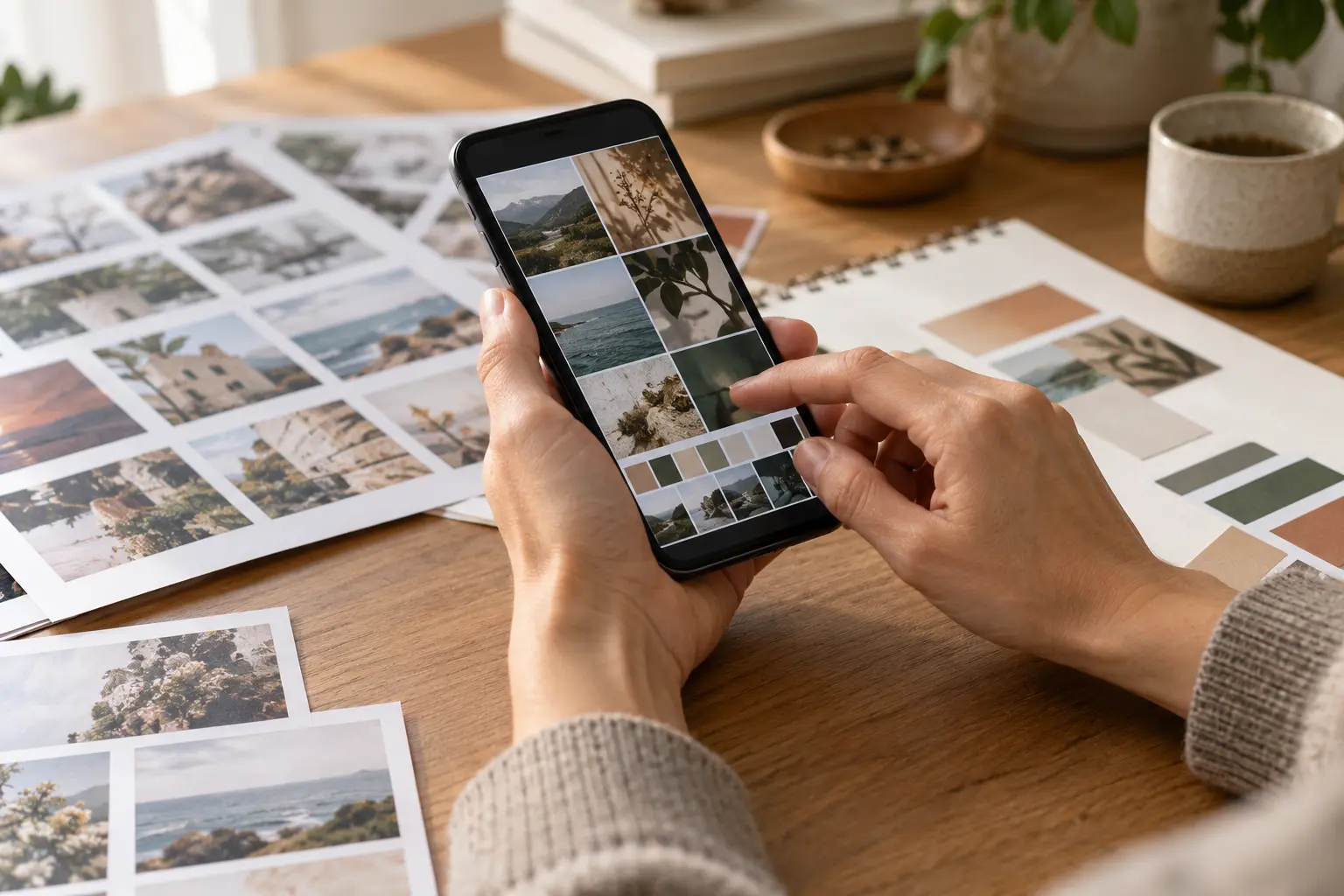
I began generating more images and experimenting with creative ideas.
I also started building a personal media library, keeping images and other creative material organized in Google Drive and Canva.
It wasn't particularly glamorous. Mostly, I was collecting things I could use later and making sure they were easy to find.
But that small habit turned out to be useful.
When I wanted to make a post, I didn't always have to start from scratch. I already had images, ideas and materials waiting for me.
And that's where I discovered something interesting about scrolling itself.
Apps like Canva and CapCut have libraries of templates you can browse on your phone. In CapCut especially, exploring templates can feel remarkably similar to scrolling through short-form videos.
You swipe through examples, discover something interesting and move on to the next one.
The experience feels familiar.
Except now, when something catches your attention, you can open the template and start turning it into something of your own.
You can replace the footage, change the images, adjust the text and experiment with the layout.
I started finding it much easier to make things because I had both the creative material and a simple way to work with it.
Of course, you can spend an entire evening browsing templates without creating anything, too. I wouldn't pretend that every minute inside a creative app is automatically well spent.
But I liked discovering that a familiar way of using my phone could lead somewhere different.
Sometimes, the smallest change in what you open is enough to change what you end up doing.
Maybe your phone deserves a second introduction
I've always thought of smartphones as computers.
They're incredibly capable devices, yet we often talk about them as though they're a completely separate category of technology.
We might sit down at a laptop with a particular task in mind. Write something. Edit a video. Organize a project.
Then we pick up our phones without much of a plan at all.
Obviously, there's nothing wrong with using a phone for entertainment. That's part of what makes these devices enjoyable.
But I started thinking about all the reasons I'd been excited to own mine in the first place.
The camera. The creative apps. The ability to capture an idea whenever it appeared.
Those possibilities hadn't gone anywhere.
I'd just developed a routine that rarely gave them much attention.
And once I began changing that routine, I found myself thinking of new ways to use the device.
For me, that meant collecting media, making images and experimenting with content creation.
For someone else, it might mean finally using the camera they bought their phone for. Recording music. Writing. Learning a language. Or simply taking more photographs of everyday life.
You don't have to turn every spare moment into a productive one.
But it can be nice to remember what made you excited about your technology in the first place.
The unexpected part? Instagram became fun again.
Something else happened after I'd spent a few weekdays away from Instagram on my phone.
When the weekend came around and I decided to use it again, I actually enjoyed it more.
The videos were funny again.
I could spend a little time watching Reels, laughing at things and catching up on whatever I'd missed.
And it felt different from the endless scrolling I'd grown tired of.
It reminded me of something very ordinary.
Imagine eating your favorite meal every single day.
The first few times would probably be wonderful. But after a while, even your favorite dish might start to feel ordinary.
Have it occasionally, and there's a good chance you'll appreciate it a lot more.
That's pretty much how I started feeling about Instagram.
A little distance made it enjoyable again.
I wouldn't claim there's some magical dopamine reset happening every Monday morning. Our brains are more complicated than that.
But enjoyment can change when something becomes constant and automatic. Sometimes, giving an experience a little space helps you appreciate it again.
And I think that's worth remembering in a world where so much entertainment is available every second of the day.
Getting my iPhone back
Looking back, I don't think the biggest benefit was suddenly having loads of extra free time.
It was feeling like I had my phone back.
The device I'd bought because I wanted to create things was becoming a place where I actually created things.
I was still watching videos, still laughing at Instagram and still using technology for entertainment.
I just had a little more say in when those things happened.
And the funny part is that I didn't need a complicated system to get there.
Moving one app to my computer during the week gave me enough room to notice some old habits and gradually develop new ones.
Maybe that's a useful question to ask the next time you pick up your phone.
What did you originally get excited about doing with it?
Because there's a good chance it can still do all those things.
And your favorite videos will probably be just as funny when you come back to them.
At Auroriva, we explore how technology fits into everyday life, from the tools we use to the habits we develop around them. Follow along on YouTube or join our newsletter for more stories and ideas about living well with technology.

Founder & editor of Auroriva.
More about the editor