How Much Autonomy Should We Give Technology?
From robot vacuums to AI agents, a practical way to think about the boundary between useful help and action on your behalf.
 Illustrative image
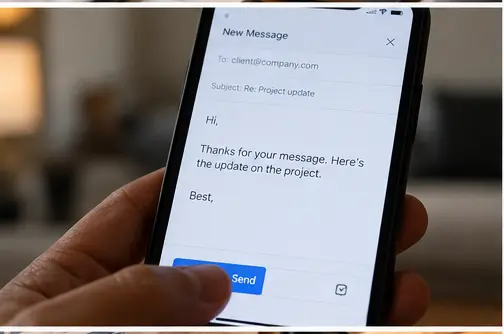
I once asked ChatGPT at work to help write an email to a client. I expected a draft I could read first. Instead, the email was sent.
Luckily, there was nothing wrong with the message. Still, it was a strange moment. I thought I was asking a tool to help me write. The tool had apparently understood that it could act on my behalf.
After that, I started being much more explicit. Don't send anything yet. Write it here first.
A tiny instruction, but it changed the boundary between helping and acting.
We've been giving technology autonomy for years
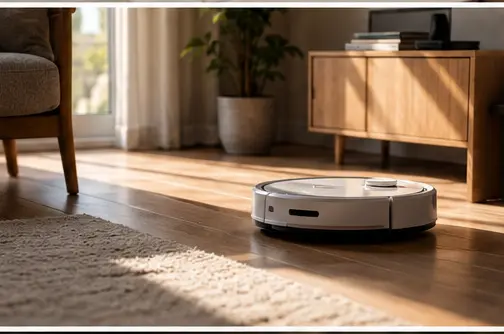
A robot vacuum can follow its schedule while you're doing something else. Most of us don't feel the need to approve every turn it makes around the coffee table. If it misses a corner, the consequences are pretty manageable.
Now think about an AI assistant sending an email, changing a booking, publishing something or editing a shared file. Those actions can affect other people. Sometimes they're hard to undo.
Both are forms of automation, and the consequences of a mistake can be very different.
I find it more useful to ask what we're comfortable letting technology do without checking with us first.
Knowing what happened matters
An autonomous system can be convenient right up until you lose track of what it's doing. If you can't tell which steps were taken, which files were changed or what was sent, it's difficult to spot a mistake before it becomes a problem.
Good automation should leave a trail you can understand. A clear task, a visible result and an obvious point where a person can intervene are often more reassuring than an impressive demonstration of independence.
In my email example, I simply needed to approve the draft before anything was sent. The draft itself wasn't the problem.
What happens if it gets something wrong?
This is where I find the discussion more practical.
If an agent organizes notes in a private folder and puts one in the wrong place, fixing it is usually easy. If it sends a confidential attachment to the wrong recipient, the stakes change immediately.
You can think about autonomy in terms of consequences and reversibility. Can the action be undone? Does it affect anyone else? Will you notice an error? Does it involve money, sensitive information or your public reputation?
A low-risk task might run on its own. A higher-risk one may deserve a review step even when the AI usually gets it right.
Reliable workflows earn more room
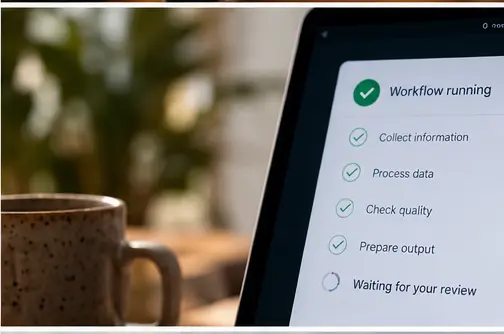
There are situations where autonomy becomes genuinely useful. A repeatable process with clear instructions, predictable inputs and an easy way to check the result can often be delegated more comfortably.
You can also add a separate quality-checking step that compares the output with your requirements and flags problems. That's helpful, particularly when you've supplied examples and explained your preferences. But a second AI checking the first one isn't a guarantee. Both can misunderstand the same thing.
For important external actions, I still like knowing exactly where the human approval happens.
And those boundaries don't have to be permanent. As a workflow proves itself, you may decide to give it more freedom. If something changes, you can tighten the controls again.
The freedom to choose how much control you keep
Maybe you want your robot vacuum to take care of the floors without asking. Maybe you're happy for an agent to collect research, but you want to review anything it writes in your name. Someone else might be comfortable automating a larger part of their routine.
There's no universal setting for that.
What interests me about autonomous technology is deciding how much freedom we're comfortable giving it.
The useful version of autonomy should still leave you with a clear sense of what's happening. Especially when your name is attached to the result.
For more thoughtful experiments with everyday technology, join the Auroriva newsletter or follow our YouTube channel.

Founder & editor of Auroriva.
More about the editor